
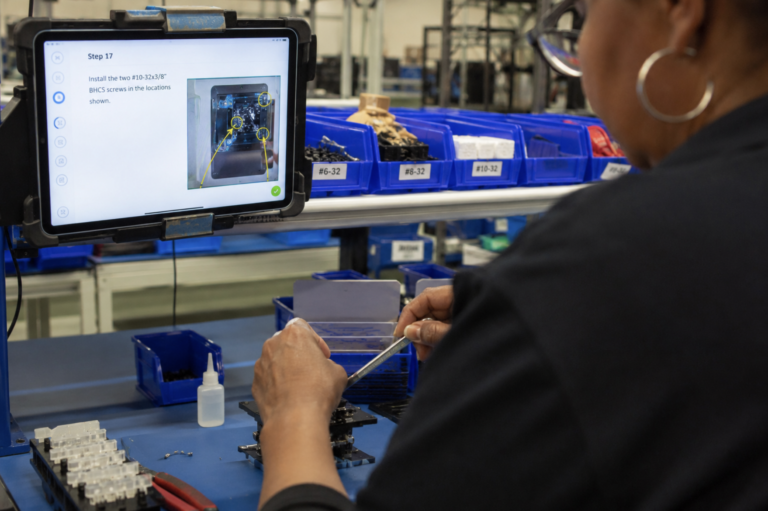
Digital work instructions drift out of sync with the floor within weeks of digitization — and that admission comes from the digital work instruction category itself, not from its critics. Manual.to’s 2026 guide concedes that once instructions are digitized, the documentation lives in one system while the actual work happens in another, and the two “drift apart within weeks.” Symestic’s guide says the same: without live production context, digitized content drifts away from what is actually being produced. The paperless factory was supposed to end the outdated binder. It ended the appearance of the outdated binder.
Why do digital work instructions become outdated?
For the same reason paper ones did: the method on the floor keeps evolving and the document does not. The material changes, the fixture gets modified, a better technique spreads shift by shift, a temporary workaround outlives the problem it patched. Digitization changed none of that. It changed the budget line — conversion got funded, validation did not. Most projects paid to move the existing documents onto screens and assumed the documents were true. The ones that were fiction on paper became fiction in high resolution.
TechBii’s 2026 assessment of the paperless factory is blunt: it never fully arrived. Clipboards persist, printed instructions stay taped to stations, and quality checks get recorded by hand and entered later. Where screens did arrive, they inherited the old documents’ relationship with reality.
What makes digital drift more dangerous than paper drift?
Paper drift announces itself. Coffee rings, torn corners, a handwritten correction in three different inks — the artifact looks exactly as stale as it is, and everyone on the floor calibrates their trust accordingly. Nobody defends a dog-eared binder in an argument.
Digital drift hides behind a current-looking screen. The system reports the document as live, approved, and version-controlled. Revision C renders beautifully at the workstation while the floor runs revision “what the most experienced person figured out in March.” And the screen carries institutional authority the binder never had: challenging a validated digital document feels like challenging the system that validated it. So the deltas go quiet.
This is how a workaround becomes the unwritten standard. Quality writing calls the mechanism normalization of deviance: the deviation gets repeated without consequence until, as the QHSE Standard puts it, “it is not rule-breaking; it is the redefinition of the rule.” The digital document does not stop that redefinition. It just declines to record it.
How do you keep digital work instructions accurate?
Not with a review calendar — drift is event-driven, not time-driven. The document goes stale the week of the material change, the retrofit, the workaround that stuck. What keeps instructions accurate is validation at the machine, triggered by events, done with the people who run the job.
The uncomfortable rule underneath: digitizing a document is not capturing a process. Capture means someone stood at the machine, watched the job actually run, and reconciled every delta between the document and the hands. Rendering is the easy part. The market sells rendering, versioning, and distribution — and quietly assumes capture and validation, which are the only parts that decide whether the screen is telling the truth.
Run the 30-minute delta check this week
At the workstation, not in the conference room.
- Open one digital work instruction on the screen where it is actually consumed. Pick a process that matters — high volume, high scrap risk, or audit-critical.
- Ask the person running the job: “Show me every step where what you do differs from what this says.” Not “do you follow this” — that question produces politeness, not data.
- Count the deltas and classify each: document wrong, method uncaptured, or step obsolete.
- Score it. Three or more deltas on a current-revision document means the system is version-controlling fiction. Weight the score by how old the revision is and how critical the process is.
- Log the trigger. For each delta, ask what event created it — material change, retrofit, workaround. That list tells you which events should trigger validation in your plant, instead of the review anniversary.
One instruction, one person, thirty minutes. Most plants find the first delta before minute five.
Validate before you render
The screen is current. The revision is approved. The floor is somewhere else. Unless the actual working method gets captured and validated with the people who run it, the tablet will keep distributing the gap at network speed — and calling it compliance.
This is the work the SenseiLab SOP Sprint does: 30 days on your floor, capturing what actually runs the operation and validating it at the machine before anything gets rendered, so the screen and the hands finally agree. The delta check above is the thirty-minute version. The Sprint is the scaled one.
FAQ
Why do digital work instructions become outdated? Because digitization projects fund converting documents to screens but rarely fund validating them against the floor. The method keeps evolving through material changes, retrofits, and workarounds, while the digital document — like the paper one before it — only changes when someone deliberately updates it.
Does going paperless fix SOP compliance? No. Going paperless improves distribution, version control, and legibility, but if the source document does not match how the good part is actually made, digitization distributes the mismatch faster and makes it look current. Compliance to an inaccurate document standardizes the wrong method.
How do you keep digital work instructions accurate? Validate at events, not anniversaries. Trigger a side-by-side check at the machine whenever the material, equipment, or method changes, and reconcile every delta between the document and what the experienced hands actually do.
Diego Echenique is the CEO and co-founder of SenseiLab. He has spent 20+ years in manufacturing around the world — launching plants, leading operations, and running Lean and Six Sigma transformations across automotive, mining, and heavy industry.