A personal story about the most ambitious Operational Excellence project I ever touched — and what every U.S. manufacturer needs to hear before they make the same mistakes we nearly did.
It was 6 AM in the Atacama Desert. The kind of cold that doesn’t care how many layers you’re wearing.
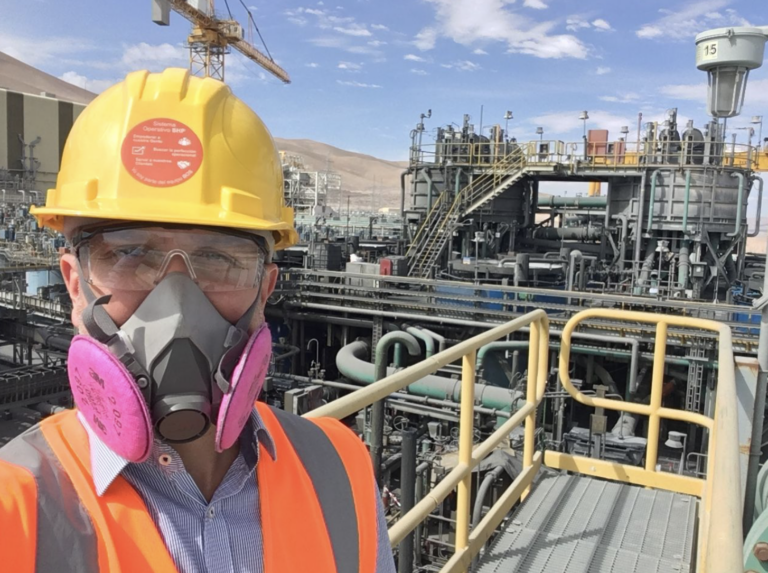
I was standing at one of the most remote copper mining operations on the planet — Minera Escondida in Chile, owned by BHP, the world’s largest mining company — watching a frontline supervisor run a daily accountability meeting with his crew. No laptops. No PowerPoint deck. Just a visual board, a marker, and a conversation that had more clarity and purpose than most executive strategy sessions I had ever witnessed.
That’s when it hit me.
We hadn’t just built a management system. We had changed how 1,200 people thought about work.
The Challenge Nobody Warned Us About
When BHP set out to develop its own proprietary Operational Excellence framework — what eventually became known as BOS (BHP Operating System) — the ambition was enormous. This was a company with operations across Australia, South America, and beyond. Thousands of workers. Billions in assets. The goal was simple on paper: make improvement central to every single person’s role, every single day.
Simple on paper. Brutally complex in practice.
I wasn’t just brought in as a team member on this project. At the time, I was leading the Shinka Management consulting team — a group of nearly 15 senior consultants who had been entrusted with one of the most complex organizational change mandates I had ever faced in my career. We weren’t there to run a workshop series or deliver a report. We were there to redesign how an entire organization thought, decided, and acted — every single day, at every level of the hierarchy.
Leading that team was an experience that shaped everything I know about transformation. Fifteen consultants, each an expert in their own right, each working in different areas of the operation simultaneously — maintenance, production planning, leadership development, problem-solving routines, visual management. Coordinating that work, keeping everyone aligned to the same north star, and making sure the client felt guided rather than overwhelmed — that was its own leadership challenge on top of everything else.
And I can tell you honestly — the first year was humbling. Not because the tools were wrong. Not because the strategy was flawed. But because we underestimated the one thing that no framework can automate: culture.
What BOS Actually Was — And What It Wasn’t
Let me be clear about something that gets lost in most Operational Excellence conversations, especially in U.S. manufacturing circles today.
BOS was not a software platform. It was not a Lean certification program. It was not a consultant’s toolkit that got handed off after 90 days.
BOS was a living operating system — a structured way of thinking, leading, and problem-solving that started on the shop floor and ran all the way to the C-suite. Inspired heavily by the Toyota Production System, it was built on three foundational pillars:
1. Leadership routines and behaviors — how managers show up, how they coach, how they escalate problems.
2. Standardized work and visual management — making the “normal” visible so that “abnormal” could never hide.
3. Continuous improvement embedded in daily operations — not as a separate initiative, but as the way work is done.
The results, when it worked, were staggering. BHP publicly credited BOS with generating over $1.3 billion in cost savings and revenue uplift in a single year. Escondida’s Cathodes operation eventually won the Shingo Prize — the highest global recognition for Operational Excellence — becoming the first BHP operation and first private mining company in Chile to earn it.
But getting there? That’s the story most people never hear.
The 5 Hard Lessons From the Trenches
1. Leadership Commitment Is Not the Same as Leadership Buy-In
We had executive sponsorship from day one. What we didn’t have — at least not immediately — was genuine behavioral change at the middle management level. Leaders would say the right things in workshops and then go back to managing by spreadsheet and exception reports.
The breakthrough came when we stopped training and started coaching leaders in the field. We went to where the work happened. We stood in gemba walks. We sat in tier meetings. And slowly, the language changed. The behaviors changed. The system became real.
The lesson: You can’t install culture in a conference room. If your leadership team isn’t willing to change how theybehave — not just what they say — your Operational Excellence system will be a beautiful binder collecting dust.
2. The Front Line Always Knows More Than You Think
Some of the most powerful improvements we identified didn’t come from our analysis. They came from operators and maintainers who had been watching the same inefficiency happen every single shift for years — and had never been asked for their input.
BOS created structured channels for frontline voices. Idea management systems. Daily problem-solving routines. And once those channels opened, the improvement ideas flooded in. More than 2,000 improvement ideas per month were eventually being submitted across BHP’s operations globally.
The lesson: Your best consultants are already on your payroll. Build a system that listens to them.
3. Standardization Is a Gift, Not a Constraint
In the early days, we faced resistance to standardized work. “Every shift is different.” “Our operation is unique.” “You can’t standardize what we do here.”
Sound familiar? I hear the same thing from manufacturing leaders in Florida and across the U.S. every week.
But here’s what we learned: standardization doesn’t kill creativity. It frees it. When you standardize the repeatable, you liberate your best people to focus on the truly complex problems. BHP’s maintenance teams went from reactive firefighting to proactive precision — and equipment life at some sites extended by 40% as a direct result.
The lesson: Standardize the routine so your people can solve the exceptional.
4. Technology Accelerates — But It Doesn’t Replace Discipline
We had incredible digital tools — real-time dashboards, IoT sensors, predictive analytics, digital work instructions accessible on mobile devices in the field. And all of it was valuable.
But here’s the uncomfortable truth we learned early: technology deployed on top of broken processes just creates faster chaos.
The operations that extracted the most value from the digital tools were the ones that had first built disciplined human systems. The morning huddle happened every day, without exception, before anyone looked at the dashboard. The escalation path was crystal clear before the alert fired on the screen. The operating discipline came first. The technology amplified it.
The lesson: Don’t digitize dysfunction. Fix the system. Then accelerate it.
5. Sustainability Requires Ownership Transfer
The biggest mistake I’ve seen companies make — in mining, in manufacturing, in aviation, in maritime — is treating Operational Excellence as a consulting project with a start and end date.
BOS worked long-term at Escondida because the system was owned by the people inside the operation, not by an external team. We spent enormous effort building internal capability — coaches, facilitators, champions at every level of the organization. We measured our success not by deliverables completed, but by whether the system kept running after we stepped back.
The lesson: If your Operational Excellence system collapses when the consultant leaves, you never actually built one.
The Leadership Challenge Nobody Talks About: Managing the Transformation Team Itself
Here’s something that rarely makes it into case studies or conference keynotes.
Running a transformation of this scale isn’t just about managing the client organization. It’s about managing your ownteam through the chaos.
Leading 15 consultants simultaneously deployed across different functions of a massive mining operation — that’s a coordination challenge that will test everything you know about leadership. Each person is deep in their workstream. Each one is facing resistance, ambiguity, and pressure from their respective client stakeholders. And they’re all looking to you to hold the vision together when the ground is shifting under everyone’s feet.
What I learned from that experience:
Alignment on the “why” has to happen before the “how.” If your team doesn’t deeply understand what success looks like — not just the deliverables, but the transformation — they’ll optimize their individual workstream at the expense of the whole system.
You have to model the behavior you’re trying to install in the client. If you’re teaching daily accountability routines to operations leaders while your own team has no structured rhythm, no one will believe you. We ran our own huddles. We had our own escalation process. We practiced what we preached.
Celebrate the wins loudly — but diagnose the losses honestly. When something wasn’t working, we’d stop, regroup, and adjust. No ego. No politics. The mission was bigger than any individual’s comfort zone.
That experience of leading a large, dispersed consulting team through high-stakes organizational change is one of the things that makes SenseiLab different. We don’t just know the frameworks. We know what it feels like to carry the weight of a transformation on your shoulders — and still show up the next morning with clarity and conviction.
The mining industry in Chile and the manufacturing floors of Florida might seem worlds apart. But I promise you, the problems are the same.
Right now, across aerospace suppliers in Central Florida, maritime manufacturers in Jacksonville and Tampa, and industrial operations throughout the Southeast, I see the same patterns:
- Operational results that vary wildly from shift to shift
- Middle managers drowning in reactive firefighting
- Continuous improvement initiatives that launch with energy and quietly die in six months
- Digital transformation investments that aren’t delivering the ROI that was promised
These are not technology problems. They are system problems. And they require system solutions.
Building your own Operational Excellence system — your own version of BOS — is one of the highest-leverage investments a manufacturing leader can make. But it has to be done right.
Before You Start Building Your Operational Excellence System: 5 Questions to Ask Yourself
- Is your leadership team ready to change their daily behaviors — not just their vocabulary?
- Do you have a clear mechanism to capture and act on frontline ideas?
- Are your core processes stable enough to standardize, or are you still fighting fires every shift?
- Is your technology roadmap built on top of operational discipline, or ahead of it?
- Who inside your organization will own this system five years from now?
If the answers make you uncomfortable, that’s exactly where the work begins.
Ready to start that conversation? At SenseiLab, we help manufacturers across Florida and the U.S. build the operational systems that turn strategy into daily discipline. Reach out — the first conversation is always free, and it might be the most valuable hour you invest this quarter.
About the Author: This post was written by the founder of SenseiLab. At the time of this project, he served as a senior leader at Shinka Management, where he led a team of nearly 15 consultants responsible for deploying the BHP Operating System (BOS) at Minera Escondida in Chile — one of the world’s largest copper mining operations and a Shingo Prize Award recipient. That experience became the foundation for everything SenseiLab does today.