
The corrective action closed in thirty days. The root cause was documented, the operator was retrained, the auditor accepted the package. Two quarters later the same nonconformance is back on the log, attached to a different part number, and everyone in the quality meeting is careful not to say what they’re thinking.
If that sequence sounds familiar, the problem is probably not your team’s rigor. CAPA effectiveness in manufacturing usually fails for a quieter reason: the entire corrective loop runs inside the document layer, and never enters the layer where the work actually happens.
Why do corrective actions fail in manufacturing?
The short answer: most corrective actions correct the process back to a document that never matched how the good part gets made.
Walk through the standard loop. A nonconformance is raised. The investigation pulls the approved procedure and compares it to what the operator did. It finds a deviation. The corrective action retrains the operator to the procedure, adds a verification step, and closes the finding. Every box is legitimately checked.
Nobody in that loop asked the one question that matters: was the deviation the error, or was the deviation the working method? On a real floor, the answer is uncomfortable more often than anyone budgets for. The operator’s “deviation” is frequently the fix they run every shift because the approved document describes a machine two retrofits ago, a material two suppliers ago, or a tolerance the customer quietly tightened last year.
When that’s the case, the corrective action doesn’t remove the error. It reinstalls it. The retraining pushes the operator back toward the fictional method, the operator drifts back to the working one within weeks because the working one makes good parts, and the gap between paper and practice reopens exactly where it was. The finding returns wearing a new date code, and the CAPA log starts to look like a subscription.
What do AS9100 auditors look for in 2026?
The audit world has already moved on this. 2026 AS9100 auditor guidance names identifying the symptom rather than the systemic cause as the most common corrective-action failure auditors find, and directs root-cause work to consider human factors like confusing work instructions rather than stopping at the operator (QMII). And the audit itself is walking toward the floor: current guidance describes auditors asking operators to demonstrate critical steps and show how competence survives revision changes, tooling changes, and new materials, instead of accepting training sign-off sheets (Smithers).
Read those two shifts together and the message is blunt. The auditor is no longer comparing your process to your binder. The auditor is comparing your binder to your floor. Most CAPA processes still only do the first comparison.
The reference case is public record. The FAA’s audit of Boeing and Spirit found the vast majority of non-compliances involved not following approved processes and procedures, in facilities that had no shortage of approved processes (FlightGlobal). Having the documents was never the constraint.
Where the loop actually breaks: a floor example
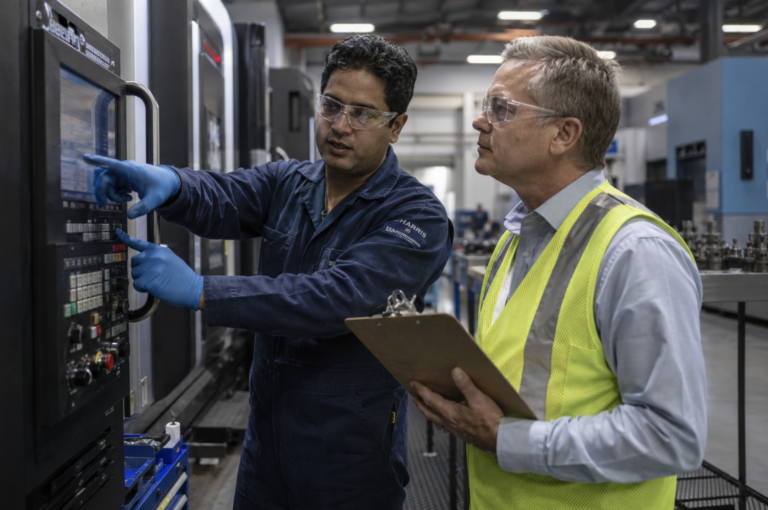
Years ago, in a refractory plant, I watched a recurring dimensional defect survive three corrective actions. [INVENT — VERIFY: plant, defect, and count are placeholders — swap in the real sequence] Each investigation found the same thing: the press operator wasn’t following the setup procedure. Each closure retrained him. On the fourth pass, someone finally stood at the press for a full cycle and learned that the procedure’s setup sequence produced a subtle misalignment on that specific machine, and the operator’s unauthorized sequence was the only version that held tolerance. He had been quietly absorbing a documentation error for two years, and getting retrained out of it three times.
That is the failure mode in one scene. The investigation had rigor. It just aimed the rigor at the wrong layer.
How do you make a CAPA actually stick?
The fix is not a better form. It’s one added discipline: no corrective action closes until the corrected procedure has been validated next to the operator actually running the job, for a full cycle, on the machine in question. Not a walkthrough. Not a sign-off. A side-by-side comparison of the written method and the running method, with the deltas either adopted into the document or genuinely corrected on the floor.
QMS software will not do this for you. The category is built to make the loop faster: routing, approvals, reminders, dashboards. Speed is worth having, but a faster loop that never touches the floor just closes on fiction sooner.
Run this before your next audit: the five-question CAPA autopsy
Pull your last three closed CAPAs that recurred, and put each one through five questions:
- Did the investigation observe the job running, or only compare records?
- Was the “deviation” tested — does the documented method actually produce the good part on today’s machine and material?
- Who last revised the procedure, and had they run the process in the last year?
- Did anyone ask the operator why they work the way they work, as a genuine question rather than an interrogation?
- After closure, did anyone go back 60 days later to see which method the floor was actually running?
Three or more “no” answers means your CAPA process is validating documents, not processes. The finding will be back. You already know which one.
Fix the layer your CAPA never reaches
This is the layer SenseiLab works in. The 30-day SOP Sprint puts a practitioner and an AI capture agent next to your operators, captures the method that actually makes the good part, validates it against the floor, and turns it into living procedures that update when the process does. If your CAPA log has repeat customers, the Sprint is where they stop.
Book a free 30-minute SOP Readiness Diagnostic: senseilab.io/book-a-call
FAQ
Why do corrective actions fail in manufacturing? Most corrective actions fail because they correct the process back to the approved document instead of the working method. If the document never matched how the good part gets made, retraining operators to it reinstalls the original error, and the nonconformance recurs.
Why does the same nonconformance keep recurring after CAPA closure? Recurrence usually means the root cause was identified at the symptom level. The investigation found an operator deviation and stopped, without testing whether the documented method actually produces a good part on the current machine and material.
What do AS9100 auditors look for in 2026? Auditors increasingly ask operators to demonstrate critical process steps rather than accepting training sign-off records, and they flag symptom-level root cause as the most common corrective-action failure. The audit now compares the documentation to the floor, not the floor to the documentation.
Diego Echenique is the CEO and co-founder of SenseiLab. He has spent more than 20 years in manufacturing operations across five continents, and now helps regulated manufacturers capture the knowledge that actually runs their floors.