Everyone is saying the same thing.
“We don’t have enough people.”
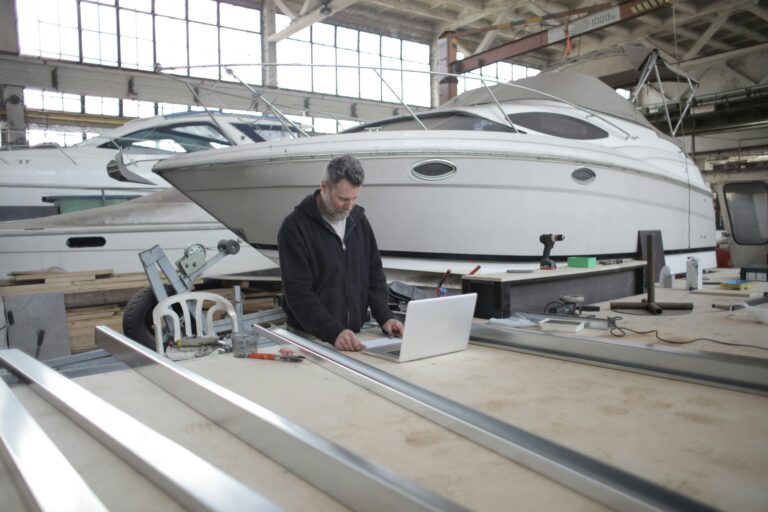
Spend time inside shipyards in Florida, the Gulf Coast, or Europe, and you will hear it everywhere. Workforce shortage has become the default explanation for delays, inefficiencies, and missed deadlines.
And the data confirms it.
Nearly 27% of the U.S. shipbuilding workforce is over 55 years old, signaling a wave of retirements (McKinsey & Company). The industry will need close to 250,000 additional workers over the next decade just to sustain demand (Maritime Industrial Base Program).
At the same time, turnover rates in some shipyards reach 20–30% annually, creating constant instability on the shop floor (Center for Maritime Strategy).
This is not temporary. It is structural.
But here is the question most leaders are not asking:
If you had all the people you needed tomorrow… would performance actually improve?
The Hidden Reality Behind the Workforce Crisis
The shortage is real. The pressure is real.
But when you look inside operations, something else becomes clear.
Even in fully staffed teams:
- Work does not flow consistently
- Processes are unstable
- Problems repeat
This is not just a labor issue.
It is an execution issue.
The Real Capacity Gap in Marine Manufacturing
The United States produces less than 1% of the world’s commercial ships, while China accounts for more than 50% of global shipbuilding output.
This gap is not only about labor cost.
It reflects something deeper:
- Industrial capacity
- Process stability
- Execution discipline
Many shipyards struggle to deliver consistently—even when demand is strong.
When Workforce and Supply Chain Collide
The real challenge emerges when two problems intersect:
- Workforce shortages reduce production speed
- High turnover destroys continuity
- Supply chains remain fragmented and unpredictable
The result is not just delay.
It is systemic instability.
Work starts, stops, waits, and restarts.
And over time, that becomes the operating model.
The Hidden Cost: Knowledge Loss
One of the most critical risks is rarely measured.
Knowledge loss.
Every time an experienced technician or supervisor leaves:
- Years of know-how disappear
- Best practices are not documented
- Critical insights are not transferred
New employees do not just need training.
They need context:
- How work is actually performed
- Where problems typically occur
- What works in real conditions
Without this, organizations rely on individuals—not systems.
And variability increases.
This Is Not a Workforce Problem. It Is an Execution Problem.
The marine industry does not lack:
- Demand
- Investment
- Ambition
It lacks:
Consistent execution at scale
The companies that will lead the next decade will not be those with the most people.
They will be those that can:
- Capture knowledge instead of losing it
- Stabilize processes instead of reacting
- Enable consistent performance despite turnover
- Create flow in complex environments
Because ships are not delayed by strategy.
They are delayed by execution.
The Shift Already Underway
What we are witnessing is a transformation:
- From experience-based execution → system-based execution
- From individual dependency → operational consistency
- From firefighting → controlled performance
This shift is already happening across industries.
Now it is reaching marine manufacturing.
The question is no longer if it will happen.
The question is who will adapt first.